
FACTORY AUTOMATION SOLUTIONS
Controls, interfaces, and machine data that help production run with confidence.
Factory automation is where machine decisions, operator actions, alarms, I/O, safety signals, motion, and production data all come together. When PLCs, HMIs, sensors, drives, safety devices, and networks are selected in isolation, the machine may still run — but it can become harder to commission, troubleshoot, repeat, and support.
elliTek helps OEM machine builders, system integrators, plant engineers, manufacturers, utilities, and industrial operations choose factory automation technologies around the machine, the people using it, and the long-term support strategy.

We don't build machines. We support the people who do.
PLC, HMI & I/O alignment
Machine-level control architecture
Operator interface and troubleshooting support
Production visibility and machine data
Local support from Knoxville, Tennessee
THE CONTROLS CHALLENGE
The machine is only as supportable as its controls architecture.
Factory automation decisions often start with a PLC, an HMI, or a replacement component. But the real project risk usually shows up later — during commissioning, troubleshooting, changeover, maintenance, operator training, or the next machine build.
A controls platform selected without consideration for the peripheral devices attached can become a long-term problem for future support.
Reduce platform sprawl
Standardize PLCs, HMIs, I/O, networking, and panel components so future machines are easier to build, document, train on, and support.
Make troubleshooting faster
Use control architectures, operator screens, alarms, diagnostics, and machine visibility tools that help teams find the issue instead of guessing.
Improve operator confidence
Design HMI and machine-status visibility around the people running the equipment, changing recipes, responding to alarms, and restarting production.
Plan beyond the first startup
Think through lifecycle, spares, training, supportability, expansion, communication, and future machine data needs before hardware is locked in.
WHERE FACTORY AUTOMATION FITS
Factory automation is the machine-level layer of industrial automation.
Factory automation brings together the technologies that help production machines and lines operate with consistency, visibility, and repeatability.
When elliTek talks about factory automation, we mean the systems that control, connect, display, monitor, and support machines and production equipment.
A factory automation system may include:


elliTek helps engineering and operations teams choose technologies that fit the machine, the process, the operator experience, and the long-term support plan.
These technologies connect directly to motion control, industrial networking, industrial controls, machine safety, and robotics decisions.
BUILT FOR THE PEOPLE WHO OWN THE OUTCOME
The same control system creates different pressure for every team.
elliTek supports the people responsible for designing, integrating, buying, maintaining, troubleshooting, and improving automated machines and production equipment.
Utilities and industrial operations
You need reliable control, monitoring, connectivity, and visibility for equipment that must operate consistently.
Support focus:
-
Support industrial controls, connectivity, process visibility, and operator interface needs.
-
Evaluate hardware for reliability, serviceability, and long-term support.
-
Improve diagnostics and remote visibility where appropriate.
-
Support process-oriented control conversations where factory and process automation overlap.
Manufacturers & operations leaders
You need automation improvements that support uptime, throughput, quality, staffing, safety, and maintainability.
Support focus:
-
Identify where better controls, data, or operator visibility can improve production.
-
Support upgrades without overcomplicating the system.
-
Improve changeover, status visibility, and downtime recovery.
-
Align engineering, maintenance, and production needs early.
Plant engineers & maintenance teams
You need systems that your team can troubleshoot, modify, and support after the project is installed.
Support focus:
-
Improve diagnostics, alarms, operator screens, and machine visibility.
-
Evaluate retrofit and modernization paths for legacy controls.
-
Support platform standardization across equipment.
-
Plan training before knowledge gaps become downtime.
System integrators
You need product guidance, factory resources, and responsive support without losing ownership of the integration.
Support focus:
-
Compare PLC, HMI, I/O, networking, safety, and visualization options.
-
Validate compatibility across the full machine architecture.
-
Coordinate manufacturer documentation, demos, training, and technical support.
-
Reduce project risk during design, startup, and troubleshooting.
OEMs & machine builders
You need control platforms that can be repeated, documented, sourced, supported, and scaled across multiple machine builds.
Support focus:
-
Standardize PLC, HMI, I/O, networking, and panel architectures.
-
Reduce one-off controls decisions that slow future builds.
-
Evaluate lifecycle, lead time, compatibility, and support resources.
-
Create a platform that is easier for customers to own after delivery.
CORE TECHNOLOGIES
Select the control system — not just the controller.
elliTek helps teams evaluate factory automation technologies as part of a complete machine architecture.

PLC control systems
Programmable Logic Controllers are the foundation of many machine-control and production-line automation systems.
Use PLC support when you are:
-
Designing a new machine platform
-
Replacing or upgrading legacy controls
-
Standardizing across multiple machines
-
Connecting PLCs to HMIs, drives, sensors, safety, and data systems
-
Improving troubleshooting and diagnostics
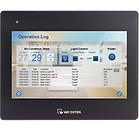
HMIs and operator interfaces
HMIs help operators understand what the machine is doing, what needs attention, and how to recover safely and efficiently.
Use HMI support when you are:
-
Building a new operator interface
-
Improving alarm clarity
-
Standardizing screen layouts
-
Adding recipes, production counts, or status visibility
-
Making equipment easier to operate and maintain

Distributed I/O and machine connectivity
I/O systems, remote I/O, sensors, and connectivity components help the PLC collect machine information and send commands to devices across the equipment.
Use I/O and connectivity support when you are:
-
Reducing panel wiring
-
Adding remote I/O
-
Connecting sensors and actuators
-
Improving diagnostics
-
Building a scalable machine architecture
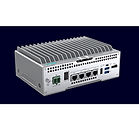
Industrial PCs, SCADA, and visualization
Industrial PCs and SCADA platforms can help teams visualize machine data, alarms, status, trends, and process information beyond a single operator screen.
Use visualization support when you are:
-
Connecting machines to higher-level monitoring
-
Improving production visibility
-
Tracking alarms or downtime
-
Supporting line-level supervision
-
Planning future data collection

Machine data and production visibility
Machine data helps teams see machine status, downtime events, alarms, production counts, performance trends, and other operational information.
Use machine visibility support when you are:
-
Trying to understand downtime
-
Adding stack lights or machine status indicators
-
Connecting machine signals to dashboards
-
Tracking production counts or machine states
-
Supporting continuous improvement

Sensors and device integration
Sensors, switches, readers, and field devices provide the information that automated equipment needs to make decisions.
Use sensor integration support when you are:
-
Verifying part presence
-
Detecting position or condition
-
Improving feedback to the PLC
-
Supporting traceability
-
Connecting field devices to the control system

Safety, motion, and network coordination
Factory automation does not stop at the PLC. The control system often needs to coordinate with machine safety, drives, actuators, robots, industrial networks, and panel infrastructure.
Use architecture support when you are:
-
Aligning PLCs, HMIs, drives, safety devices, and sensors
-
Connecting machines over industrial networks
-
Planning motion or robot-ready control systems
-
Modernizing controls and panel infrastructure
-
Reducing risk before integration starts
WHERE THE CONVERSATION STARTS
Start with the machine, line, or production problem.
You do not need to have a finished BOM or perfect specification to start a useful conversation. Factory automation support often begins with a machine goal, a support issue, a legacy system, a repeatability problem, or a production constraint.


BEFORE YOU SELECT THE HARDWARE
A better factory automation specification starts with the whole machine.
A PLC or HMI choice should not be made in a vacuum. The right control platform depends on the machine function, communication requirements, operator needs, troubleshooting expectations, environment, safety concept, data goals, and support strategy.
01.
What does the machine need to do?
Define the sequence, production target, operator steps, control modes, alarms, recipes, changeover needs, and quality requirements.
02.
What needs to connect?
List sensors, actuators, drives, safety devices, I/O, HMIs, robots, inspection systems, barcode readers, stack lights, and upstream or downstream machines.
03.
What control platform makes sense?
Consider standardization, lifecycle, programming environment, spare parts, support resources, communication needs, and future expansion.
04.
How will operators use the machine?
Plan HMI screens around startup, normal operation, alarms, recovery, recipes, setup, maintenance, and troubleshooting.
05.
What data matters?
Decide what needs to be visible: status, counts, downtime, alarms, cycle information, quality data, energy usage, or line performance.
06.
What are the real constraints?
Account for panel space, enclosure environment, electrical standards, communication distance, field wiring, heat, washdown, mounting, and lead time.
07.
How will the system be supported later?
Plan documentation, training, spare parts, diagnostics, manufacturer support, and local technical resources before the machine is handed off.
HOW ELLITEK HELPS
From uncertain requirements to a supportable controls path.
elliTek helps engineering and operations teams make factory automation decisions with the full application in mind.
Clarify the application
Start with the machine, production goal, pain point, upgrade need, or part number. elliTek helps identify what needs to be solved before narrowing the technology options.
Map the control architecture
Look across PLCs, HMIs, I/O, sensors, drives, safety devices, networking, panel components, and data requirements so the system fits together.
Compare product platforms
elliTek can help evaluate performance, compatibility, lifecycle, sourcing, programming environment, documentation, training, and support considerations.
Coordinate manufacturer resources
elliTek can bring in factory expertise, product documentation, demos, samples, training options, or technical resources when the application needs deeper support.
Support the people who own it
elliTek helps OEMs, integrators, manufacturers, utilities, plant engineers, and maintenance teams move forward with better product knowledge and local support.
TRAINING & EDUCATION
A control system is easier to own when your team understands it.
Factory automation technology changes quickly. Training helps engineering, maintenance, and operations teams build confidence with the platforms they are expected to support.
elliTek helps customers stay current through hands-on learning opportunities, workshops, lunch-and-learns, and manufacturer-supported education around PLCs, HMIs, SCADA, industrial networking, motion control, machine safety, robotics, and related technologies.


FACTORY AUTOMATION ECOSYSTEM
Technologies from trusted industrial manufacturers, matched to the machine.
elliTek supplies and supports factory automation technologies from leading manufacturers across controls, HMIs, I/O, machine connectivity, signaling, electrical infrastructure, safety, visualization, and related machine-level automation needs.


The value is not just access to product lines. It is knowing which technologies fit the machine, the control architecture, the operator experience, and the long-term support path.
LOCAL FACTORY AUTOMATION SUPPORT
Knoxville-based support for Tennessee and surrounding industrial regions.
elliTek is based in Knoxville, Tennessee, and supports factory automation customers across the surrounding region.
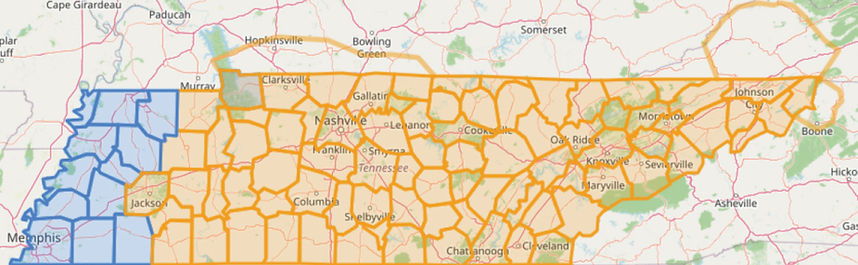
When your team needs help choosing factory automation technologies, comparing PLC or HMI platforms, upgrading a control system, standardizing machine controls, or connecting machines to production data, elliTek can connect you with local sales and application engineering support.
INDUSTRIAL AUTOMATION FAQ
What does elliTek provide for factory automation? elliTek supplies and supports factory automation technologies such as PLCs, HMIs, I/O systems, control platforms, industrial PCs, machine connectivity, sensors, motion components, safety devices, industrial networking products, and machine data technologies.
Does elliTek build automated machines? No. elliTek does not build machines and is not a system integrator. elliTek is a solutions-based automation distributor and technical support partner for OEM machine builders, system integrators, manufacturers, plant engineers, utilities, and industrial operations.
What is the difference between factory automation and industrial automation? Industrial automation is the broader category. Factory automation focuses on machine-level and production-line automation, including PLCs, HMIs, I/O, control systems, operator interfaces, sensors, machine connectivity, and plant-floor technologies used in manufacturing environments.
Can elliTek help with control system upgrades? Yes. elliTek can help teams evaluate modernization paths for legacy PLCs, outdated HMIs, obsolete control hardware, limited spares, unsupported platforms, and machines that need better diagnostics or visibility.
Who should contact elliTek for factory automation support? OEM machine builders, system integrators, plant engineers, maintenance teams, manufacturers, utilities, and industrial operations should contact elliTek when they need help selecting, upgrading, standardizing, connecting, or supporting factory automation technologies.
Can elliTek help with PLC and HMI selection? Yes. elliTek helps engineering teams evaluate PLC, HMI, I/O, and control platform options based on the application, machine requirements, communication needs, operator needs, support strategy, and long-term scalability.
Can elliTek help if we only have a production problem, not a specification? Yes. Many useful conversations start with a machine issue, production goal, downtime problem, operator challenge, or control upgrade need. elliTek can help identify the next practical step before a final BOM or part number is selected.
Where does elliTek support factory automation customers? elliTek is based in Knoxville, Tennessee and supports customers across East Tennessee, Middle Tennessee, Southern Kentucky, Western North Carolina, Southwest Virginia, and nearby industrial regions.
START THE CONVERSATION
Bring us the machine, the goal, or the problem.
You do not need to have every detail figured out. Bring a part number, BOM, drawing, panel photo, machine concept, control upgrade need, HMI concern, downtime issue, standardization goal, or production challenge.
elliTek can help you identify the next practical step.