
Is Your OT Environment as Secure as You Think It Is?

For many manufacturers, cybersecurity conversations still begin—and end—with IT. Firewalls, email security, endpoint protection. All important. But increasingly, the most exposed systems in manufacturing aren’t sitting in an office—they’re running on the plant floor.
Operational Technology (OT) environments have evolved fast. What were once isolated machines are now connected systems supporting visibility, efficiency, and remote support. That connectivity brings opportunity—but it also introduces risk.
So the real question is this:

OT Security Starts on the Plant Floor

OT security threats don’t usually start in the cloud. They start with very real, very common conditions inside manufacturing facilities:
Legacy PLCs and HMIs are still doing their job
Flat networks that grew organically over time
Remote access was added under pressure to keep production running
Equipment that was never designed with cybersecurity in mind
None of these are mistakes. They’re realities of modern manufacturing. But without a strategy, they create blind spots that are easy to overlook—and difficult to manage.
You Can’t Secure What You Can’t See

Visibility is the foundation of OT security.
If you don’t have clear insight into what devices are on your network, how they communicate, and where data is flowing, security becomes reactive instead of intentional.
Modern OT environments benefit from:
Clear machine and system visibility through HMIs and dashboards
Centralized monitoring that highlights abnormal conditions
Network-aware devices that make communication paths understandable
When operators and engineers can see what’s happening, issues surface earlier—and responses become faster and more informed.
Data Flow Should Be Intentional, Not Accidental

In many plants, data flows wherever it can rather than where it should.
Effective OT security doesn’t mean stopping data movement—it means controlling it:
Segmenting networks by function or cell
Limiting access to only what’s required
Ensuring data paths are documented and understood
Intentional data flow reduces exposure and makes troubleshooting, expansion, and security reviews far more manageable.
Remote Access: Powerful and Risky Without Guardrails

Remote access is no longer optional. OEMs, maintenance teams, and internal engineers rely on it to keep operations running.
But unmanaged remote access is one of the most common OT security risks we see:
Open ports left in place “just in case”
Shared VPN credentials
Always-on connections with unclear ownership
Secure OT remote access should be:
Purpose-built for industrial environments
Enabled only when needed
Controlled, auditable, and predictable
When done right, remote access becomes an asset—not a liability.
OT Security Isn’t Just Software

Cybersecurity conversations often focus on software tools. In OT environments, hardware plays a major role.
Physical infrastructure can either strengthen or weaken your security posture:
Industrial enclosures protect critical components
Proper climate control extends device life and reliability
Stable power and protection reduce unexpected behavior
A hardened OT environment starts with hardened infrastructure.
Safety, Signaling, and Awareness Matter

OT security isn’t purely cyber—it’s operational.
Safety systems, signaling devices, and machine status indicators play an important role in awareness:
Clear alarms help operators respond quickly
Safety systems enforce predictable behavior
Visual and audible signals reduce ambiguity during abnormal conditions
When systems communicate clearly, people make better decisions—and risks are addressed sooner.
OT Security Is a Strategy, Not a Product

One of the biggest misconceptions in OT security is the idea that a single product will “fix” the problem.
Real OT security is a strategy that brings together:
Visibility
Network control
Secure access
Reliable infrastructure
Safety and monitoring
Ongoing support
It’s not about locking everything down. It’s about understanding your environment and designing it intentionally.
How elliTek Helps
At elliTek, we work with manufacturers every day who are navigating these exact challenges. Our role isn’t to sell fear or push one-size-fits-all solutions—it’s to help customers build OT environments that are secure, maintainable, and aligned with how manufacturing actually works.
By combining best-in-class automation technologies with local expertise and real-world experience, we help turn OT security from a concern into a competitive advantage.
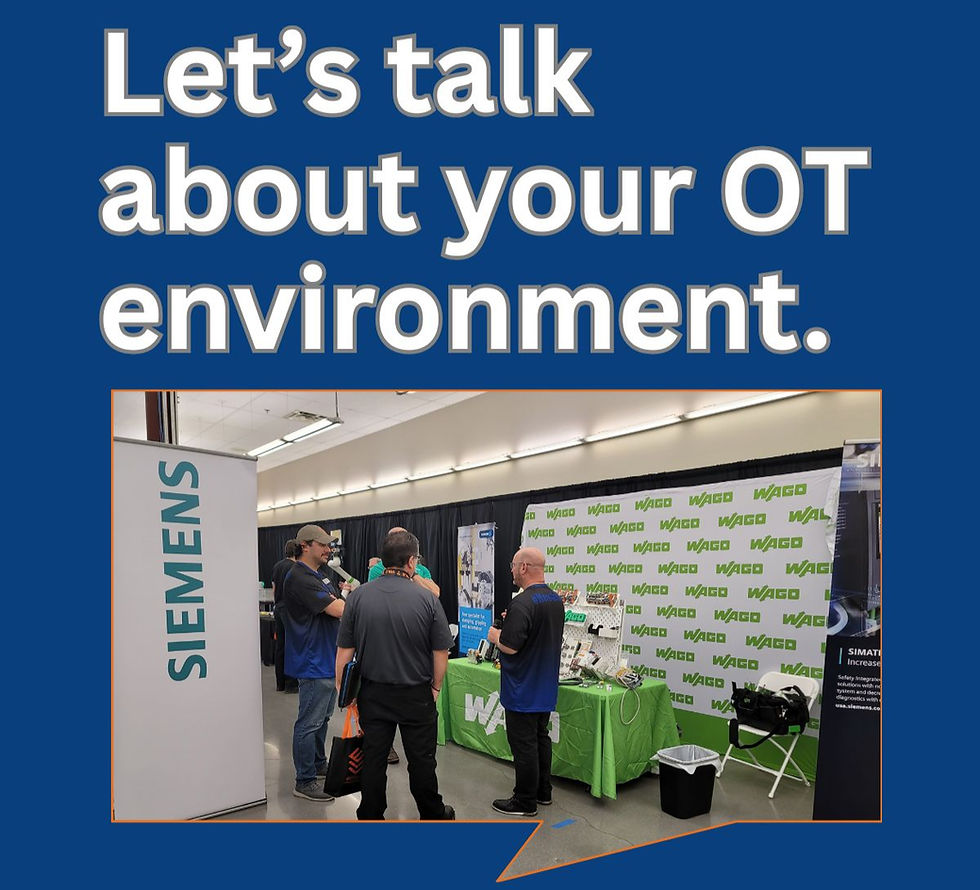
Let’s Talk About Your OT Environment
If your OT environment has grown over time—and most have—it may be worth taking a fresh look.
Not as an audit.
Not as a sales pitch.
But as a conversation.
Is your OT environment as secure as you think it is?
👉 Talk with your local elliTek Field Sales Engineer to start the discussion.

Comments